Saturday, October 1, 2011

Washington’s first inaugural address...


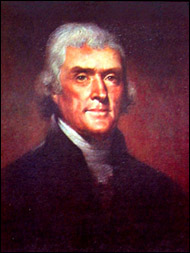
Above photo: Federal Hall National Memorial, located at 26 Wall Street in New York City, was built in 1842. This was also the original site of the old Federal Hall where, on April 30, 1789, George Washington took the oath as the first president of the United States of America.


On that day, before a large crowd, George Washington stood on the balcony of Federal Hall with his hand on an open Bible (as depicted above). After his oath of office was completed, Washington delivered his inaugural address to a joint session of Congress. Afterwards, President Washington and Congress traveled down Broadway to St. Paul’s Church for prayer, fellowship, and worship.

Excerpts from George Washington’s first inaugural address:

It would be peculiarly improper to omit in this first official act my fervent supplications to that Almighty Being who rules over the universe, who presides in the councils of nations, and whose providential aids can supply every human defect, that His benediction may consecrate to the liberties and happiness of the people of the United States a government instituted by themselves for these essential purposes, and may enable every instrument employed in its administration to execute with success the functions allotted to His charge.


And…

We ought to be no less persuaded that the propitious smiles of Heaven can never be expected on a nation that disregards the eternal rules of order and right which Heaven itself has ordained; and since the preservation of the sacred fire of liberty and the destiny of the republican model of government are justly considered, perhaps, as deeply, as finally, staked on the experiment entrusted to the hands of the American people.


And…

Having thus imparted to you my sentiments as they have been awakened by the occasion which brings us together, I shall take my present leave; but not without resorting once more to the benign Parent of the Human Race in humble supplication that, since He has been pleased to favor the American people with opportunities for deliberating in perfect tranquillity, and dispositions for deciding with unparalleled unanimity on a form of government for the security of their union and the advancement of their happiness, so His divine blessing may be equally conspicuous in the enlarged views, the temperate consultations, and the wise measures on which the success of this Government must depend.

Labels: , ,

Friday, September 30, 2011

God's country?


-First Inaugural Address of President George Washington (April 30, 1789, New York, NY):

We ought to be no less persuaded that the propitious smiles of Heaven can never be expected on a nation that disregards the eternal rules of order and right which Heaven itself has ordained.

And…

-2 Chronicles 7:14 (King James Version):

If my people, which are called by my name, shall humble themselves, and pray, and seek my face, and turn from their wicked ways; then will I hear from heaven, and will forgive their sin, and will heal their land.

In recent times, I’ve been contemplating whether the United States of America is still God’s country. We have strayed. Our nation was founded on Judeo-Christian principles. Don’t believe me? Then, check out "The Independence of a Judeo-Christian nation..."

Labels: , , ,

Saturday, May 28, 2011

Happy Memorial Day…


-George Washington addressing his officers in a church building (March 15, 1783, Newburgh, NY):

Gentlemen, you will permit me to put on my spectacles, for I have not only grown gray but almost blind in the service of my country.

Labels: , , ,

Saturday, July 3, 2010

The Independence of a Judeo-Christian nation...


On July 4, 1776, fifty-six of our Founding Fathers signed the Declaration of Independence. In doing so, thirteen states formed a free American nation separate from that of Great Britain:

We hold these truths to be self-evident, that all men are created equal, that they are endowed by their Creator with certain unalienable Rights, that among these are Life, Liberty and the pursuit of Happiness.--That to secure these rights, Governments are instituted among Men, deriving their just powers from the consent of the governed, --That whenever any Form of Government becomes destructive of these ends, it is the Right of the People to alter or to abolish it, and to institute new Government, laying its foundation on such principles and organizing its powers in such form, as to them shall seem most likely to effect their Safety and Happiness.


The Declaration of Independence was authored primarily by Thomas Jefferson and signed at Independence Hall in Philadelphia, Pennsylvania. (P.I.C. even once visited Independence Hall.)

In my continuing studies of our Founding Fathers and the idea that the United States of America was founded as a Judeo-Christian nation, I have included a few more quotes from our Founding Fathers. This idea goes all the way back (at the very least) to the Pilgrims and the Mayflower Compact. (Click the "Christianity" and "History" Label links for further quotations.)


-George Washington (1752, Part of a prayer written in Washington's prayer journal):

Let me live according to those holy rules which Thou hast this day prescribed in Thy Holy Word…direct me to the true object, Jesus Christ, the way, the truth, and the life. Bless, O Lord, all the people of this land.


-Thomas Jefferson (April 21, 1803, In a letter written to Dr. Benjamin Rush):

My views... are the result of a life of inquiry and reflection, and very different from the anti-Christian system imputed to me by those who know nothing of my opinions. To the corruptions of Christianity I am indeed opposed, but not to the genuine precepts of Jesus Himself. I am a Christian in the only sense in which He wished anyone to be, sincerely attached to His doctrines in preference to all others.


-John Adams (October 11, 1798, A message to the Officers of the First Brigade of the Third Division of the Militia of Massachusetts.):

We have no government armed with power capable of contending with human passions unbridled by morality and religion. Avarice, ambition, revenge, or gallantry, would break the strongest cords of our Constitution as a whale goes through a net. Our Constitution was made only for a moral and religious people. It is wholly inadequate to the government of any other.

Labels: , , , , ,

Monday, May 17, 2010

The words of Washington...


Over the past couple of years, I’ve been giving a lot of time to reading and researching the writings of America’s Founding Fathers. The strongest theme that I keep coming across is that, despite what some may say, they were NOT deists. Fifty of the fifty-two founding fathers were church-going, Bible-reading Christians. George Washington often spoke of God. He prayed in public. He insisted Christian clergy be part of his army (booth British and American). Washington often spoke of God’s divine hand protecting not only himself, but also guiding the creation of our nation.

All George Washington wanted to do was to return to private life as a farmer. Since Washington was incredibly passionate about liberty, freedom, and divine providence, he always answered when his country called upon him.

After the Revolutionary War, George Washington was asked to become our nation’s first President. Washington is remembered saying (and this breaks my heart): "Have I not yet done enough for my country?"

On March 15, 1783, George Washington addressed some of his officers gathered at a church building in Newburgh, NY: "Gentlemen, you will permit me to put on my spectacles, for I have not only grown gray but almost blind in the service of my country."

George Washington died on December 14, 1799. Henry Lee served in the Continental Army, was the ninth Governor of Virginia, and the Virginia Representative to the United States Congress. Lee, delivering the funeral oration, described George Washington in this way: "first in war, first in peace, and first in the hearts of his countrymen."

Here’s some more interesting quotes by George Washington (first President of the United States, commander of the Continental Army, Founding Father, Patriot):

-George Washington (April 30, 1789, New York):

No People can be bound to acknowledge and adore the invisible hand, which conducts the Affairs of men more than the People of the United States. Every step, by which they have advanced to the character of an independent nation, seems to have been distinguished by some token of providential agency. And in the important revolution just accomplished in the system of their United Government, the tranquil deliberations, and voluntary consent of so many distinct communities, from which the event has resulted, cannot be compared with the means by which most Governments have been established, without some return of pious gratitude along with an humble anticipation of the future blessings which the past seem to presage. These reflections, arising out of the present crisis, have forced themselves too strongly on my mind to be suppressed. You will join me I trust in thinking, that there are none under the influence of which, the proceedings of a new and free Government can more auspiciously commence.

-George Washington's letter to the Jewish community of Newport, Rhode Island who numbered approximately 300 (August 17, 1790, Newport, RI):

May the Children of the Stock of Abraham, who dwell in this land, continue to merit and enjoy the good will of the other Inhabitants; while every one shall sit in safety under his own vine and figtree, and there shall be none to make him afraid. May the father of all mercies scatter light and not darkness in our paths, and make us all in our several vocations useful here, and in his own due time and way everlastingly happy.

-George Washington (January 1, 1795, Philadelphia, PA):

When we review the calamities which afflict so many other nations, the present condition of the United States affords much matter of consolation and satisfaction. Our exemption hitherto from foreign war, an increasing prospect of the continuance of that exception, the great degree of internal tranquillity we have enjoyed, the recent confirmation of that tranquillity by the suppression of an insurrection which so wantonly threatened it, the happy course of our public affairs in general, the unexampled prosperity of all classes of our citizens, are circumstances which peculiarly mark our situation with indications of the Divine beneficence toward us. In such a state of things it is in an especial manner our duty as a people, with devout reverence and affectionate gratitude, to acknowledge our many and great obligations to Almighty God and to implore Him to continue and confirm the blessings we experience.

Labels: , , ,

Saturday, October 31, 2009

Speak freely...


-George Washington (March 15, 1783):

If the freedom of speech is taken away, then dumb and silent we may be led, like sheep to the slaughter.


-Thomas Jefferson (1823):

The only security of all is in a free press. The force of public opinion cannot be resisted when permitted freely to be expressed. The agitation it produces must be submitted to. It is necessary, to keep the waters pure.

Labels: , , ,

Saturday, October 3, 2009

Inspiring words...


-George Washington's address to the Continental Army before the battle of Long Island (August 27, 1776, New York, NY):

The time is now near at hand which must probably determine whether Americans are to be free men or slaves; whether they are to have any property they can call their own; whether their houses and farms are to be pillaged and destroyed, and themselves consigned to a state of wretchedness from which no human efforts will deliver them. The fate of unborn millions will now depend, under God, on the courage and conduct of this army. Our cruel and unrelenting enemy leaves us only the choice of brave resistance, or the most abject submission. We have, therefore, to resolve to conquer or die.

Labels: , , ,

Thursday, May 7, 2009

National Day of Prayer…

In honor of today, the National Day of Prayer, I’m posting excerpts from speeches and writings of three of America’s founding fathers…


-George Washington's Thanksgiving Proclamation (October 3, 1789, New York, NY):

Whereas it is the duty of all nations to acknowledge the providence of Almighty God, to obey His will, to be grateful for His benefits, and humbly to implore His protection and favor; and Whereas both Houses of Congress have, by their joint committee, requested me to recommend to the people of the United States a day of public thanksgiving and prayer, to be observed by acknowledging with grateful hearts the many and signal favors of Almighty God, especially by affording them an opportunity peaceably to establish a form of government for their safety and happiness.


-Benjamin Franklin’s Constitutional Convention Address on Prayer (June 28, 1787, Philadelphia, PA):

I have lived, Sir, a long time and the longer I live, the more convincing proofs I see of this truth-- that God governs in the affairs of men. And if a sparrow cannot fall to the ground without his notice, is it probable that an empire can rise without his aid? We have been assured, Sir, in the sacred writings that "except the Lord build they labor in vain that build it." I firmly believe this; and I also believe that without his concurring aid we shall succeed in this political building no better than the Builders of Babel: We shall be divided by our little partial local interests; our projects will be confounded, and we ourselves shall be become a reproach and a bye word down to future age. And what is worse, mankind may hereafter this unfortunate instance, despair of establishing Governments by Human Wisdom, and leave it to chance, war, and conquest.


-Thomas Jefferson’s "Notes on the State of Virginia" (1781):

And can the liberties of a nation be thought secure when we have removed their only firm basis, a conviction in the minds of the people that these liberties are of the gift of God? That they are not to be violated but with his wrath? Indeed I tremble for my country when reflect that God is just: that his justice cannot sleep forever: that considering numbers, nature and natural means only, a revolution of the wheel of fortune, an exchange of situation, is among possible events: that it may become probable by supernatural interference! The Almighty has no attribute which can take side with us in such a contest.-- But it is impossible to be temperate and to pursue this subject through the various considerations of policy, of morals, of history natural and civil. We must be contented to hope they will force their way into every one's mind. I think a change already perceptible, since the origin of the present revolution. The spirit of the master is abating, that of the slave rising from the dust, his condition mollifying, the way I hope preparing, under the auspices of heaven, for a total emancipation, and that this is disposed, in the order of events, to be with the consent of the masters, rather than by their extirpation.

Labels: , , , ,